General
Q1: Who runs Citizens of Science?
Citizens of Science is led by PhD students and research assistants from the Parkville biomedical area. This year’s team includes members from Walter and Eliza Hall Institute (WEHI), Peter MacCallum Cancer Centre, the Doherty Institute, and the University of Melbourne (MDHS). You can learn more about the team on our team page.
Q2: Is Citizens of Science affiliated with a university or official institution?
Yes, Citizens of Science is proudly supported by the University of Melbourne’s Faculty of Medicine, Dentistry and Health Sciences (MDHS), who make it possible for us to bring the Parkville scientific community together and have been long-time sponsors and advocates of the program. Find out more about our partners on our impact & partnerships page.
Q3: How long has Citizens of Science been running?
Citizens of Science began in 2022 and has grown each year, gradually engaging more mentors and connecting more members of the public with researchers across Melbourne’s biomedical precinct. Find out more about our impact on our impact & partnerships page.
Q4: How did Citizens of Science start?
Citizens of Science was founded in 2022 by Jack Alexandrovics, a PhD student at WEHI, who quickly assembled a motivated team of like-minded researchers to help him. The program was created in response to the growing gap between scientific innovation and the public it serves. As researchers, we often work in academic silos, unintentionally distancing our work from the communities we aim to help – COS was launched to help bridge that gap. Find out more about the mission of COS on our mission page.
For Mentors
Q1: Who can be a mentor in the program?
Mentors must be students who are actively engaged in a research project and will continue working on that project throughout the COS program (May – November). Most of our mentors are PhD students, but master’s and honours students are also welcome to apply.
Q2: Does my research need to be in a medical or health-related field to join as a mentor?
Yes, with exceptions. The COS program is generally focused on improving public understanding of health science and medicine, so generally all research topics should in some way be related to this.
We welcome researchers from a wide range of disciplines including anatomy, physiology, pharmacology, immunology, population health, pathology, medical biology, mental health, neuroscience, veterinary sciences, biomedical engineering, physiotherapy, nursing, health informatics, biostatistics, amongst others.
The program is available for any mode of research that is under these topics, whether it is wet lab, bioinformatics, population or epidemiological studies.
At the start of every program we run an info session where you can chat to us about your specific subject and verify your eligibility.
Q3: Do mentors need to meet any language requirements?
Mentors simply need to feel comfortable communicating in English with people who may not have a science background.
Q4: Is there any cost involved for mentors to participate?
It’s free to take part and you will not be paid to participate.
Q5: What’s the time commitment for mentors?
During the training period (May to August), mentors attend monthly workshops (typically 1–2 hours after work) and spend a few additional hours per month on program-related tasks at home. From mid-September to early November, mentors commit about 1–2 hours per week for 6 weeks, mainly self-paced activities with some scheduled sessions.
Q6: Are mentor activities held online or in person?
Mentor training workshops are held in person. For the mentoring sessions themselves, mentors and mentees schedule meetings at times and formats that work best for them. We encourage meeting in person where possible, including a small tour of the mentor’s lab or institute.
Q7: Do mentors need to organise hands-on experiments for their mentees?
No, the mentees have an opportunity to participate in lab session with GTAC, we do encourage organising a tour of the lab where possible.
Q8: Do mentors receive certificates or accreditation for their participation?
All mentors who successfully complete the program receive a certificate of participation. Currently, the program is not included on official academic transcripts.
For Mentees
Q1: Who is eligible to apply as a mentee?
Mentees must be over 18 years old and able to attend in-person activities in Parkville, Melbourne. The program is designed for people with no prior science background who want to learn about science but don’t have access to formal science education elsewhere. This program is not intended for those considering a career in science.
Q2: What level of science knowledge is required to participate?
No prior science knowledge is required. We provide basic science tutorials and prepare all content with mentors to be accessible and easy to understand.
We prioritise applicants who don’t have access to science education elsewhere. At this stage, we are not accepting applications from high school or university students.
Q3: Is there an age limit?
All applicants must be over the age of 18. As a volunteer student organisation we do not have the capacity or infrastructure to have under 18s in the program.
Q4: Is there any cost for mentees to participate?
No, participation in Citizens of Science is completely free, but can come with indirect associated costs. You will not be reimbursed for parking or commuting fares or other costs associated with participation.
Q5: Do mentees need access to a computer or internet?
Yes, mentees need reliable access to a computer and the internet to complete online learning modules as part of the program.
Q6: What is the time commitment for mentees? Are sessions held outside business hours?
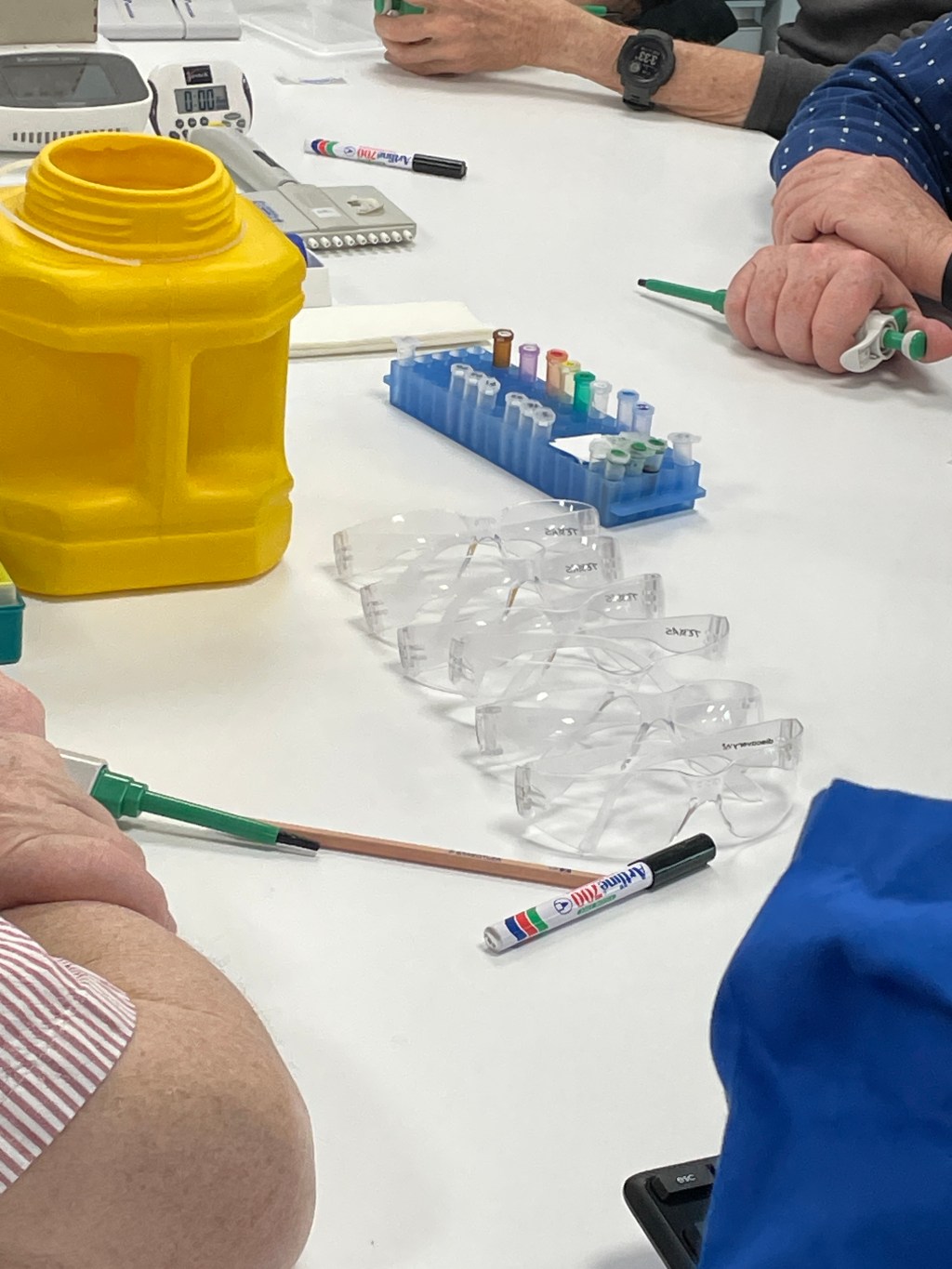
Most sessions are scheduled in the late afternoon or evening to accommodate participants. The program runs from mid September to early November, and includes about 1 hour per week initially for online learning modules and interactive tutorials, a single 2–3 hour practical lab session in the late afternoon, around 1.5 hours per week working in pairs with a PhD mentor on a research project and two in person events with the opportunity to network. More details about general program structure can be found on our program information page, and more specific dates are available on the [program 2025 page].
Q7: What happens if a mentee can’t complete the program?
Please let us know as soon as possible if you’re unable to complete the program. We’ll try to find a way for you to finish individually if possible. However, if you have major scheduling conflicts for most sessions, it may be difficult to accommodate. Since the program runs annually, you’re always welcome to reapply next year if you can’t complete this year.
Q8: Are the mentoring sessions held online or in person?
The welcome and final events of the program, as well as a hands-on lab session, are held in person. Mentor-mentee meetings are scheduled flexibly based on what works best for both. We encourage meeting in person when possible. For detailed dates please visit our [program 2025] page
Q9: Can I meet my mentor beforehand to see if I feel comfortable with them?
You’ll meet all the mentors in person at the program’s welcome event. This is a chance to mingle, chat about different projects, and share your preferences. While we can’t guarantee pairing with your top choice, we do our best to match you accordingly. Sometimes this means you will be co-mentored with another mentee as a pair. We also work closely with mentors for three months before the program to ensure everyone is well prepared for a great experience. If at any point you feel uncomfortable in your mentor-mentee pair, please let us know right away.
 Citizens of Science